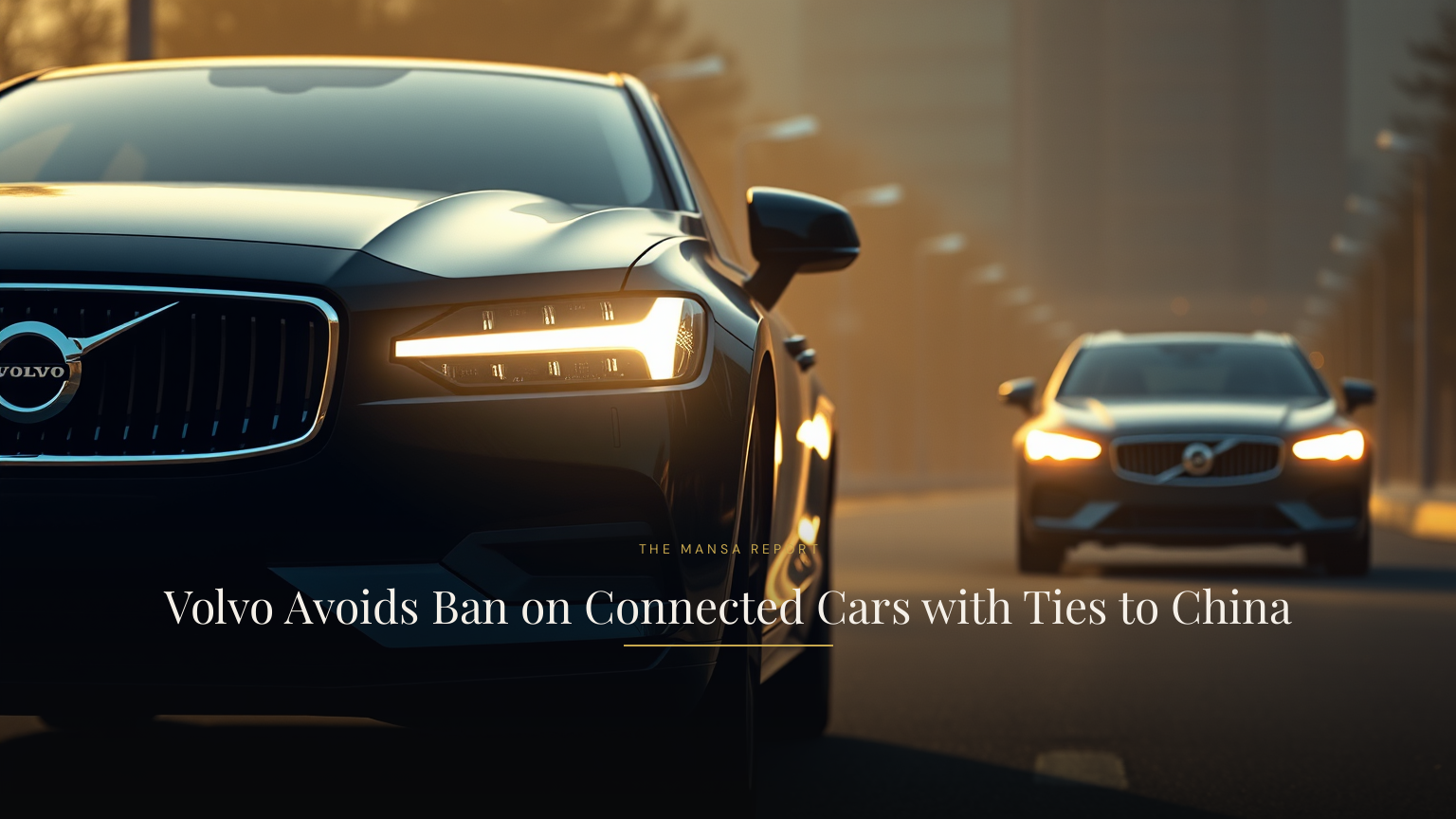
Volvo Avoids Ban on Connected Cars with Ties to China
The regulatory pressure on connected vehicles with Chinese ties has reached a critical junction. Volvo has avoided a ban on its connected cars, escaping a restriction that threatened its operational continuity in key markets.
This development highlights the intensifying friction in the US-China tech decoupling. As governments scrutinize the data security implications of software-defined vehicles, manufacturers with Chinese ownership or supply chain links face increasing scrutiny. Volvo’s ability to bypass this specific ban suggests a temporary reprieve, but the underlying tension between globalized automotive manufacturing and localized data sovereignty remains unresolved.
For the automotive industry, this is a signal that the era of seamless, borderless connected technology is ending. Companies must now account for the geopolitical risk embedded in their software stacks. The winners will be those who can decouple their data architectures from sensitive jurisdictions without sacrificing the features that drive modern consumer demand.
The question for the industry is no longer whether decoupling will happen, but how much it will cost to maintain market access.
Subscribe to The Mansa Report
Strategic intelligence on AI, business building, and the future of technology. Delivered Monday through Friday.