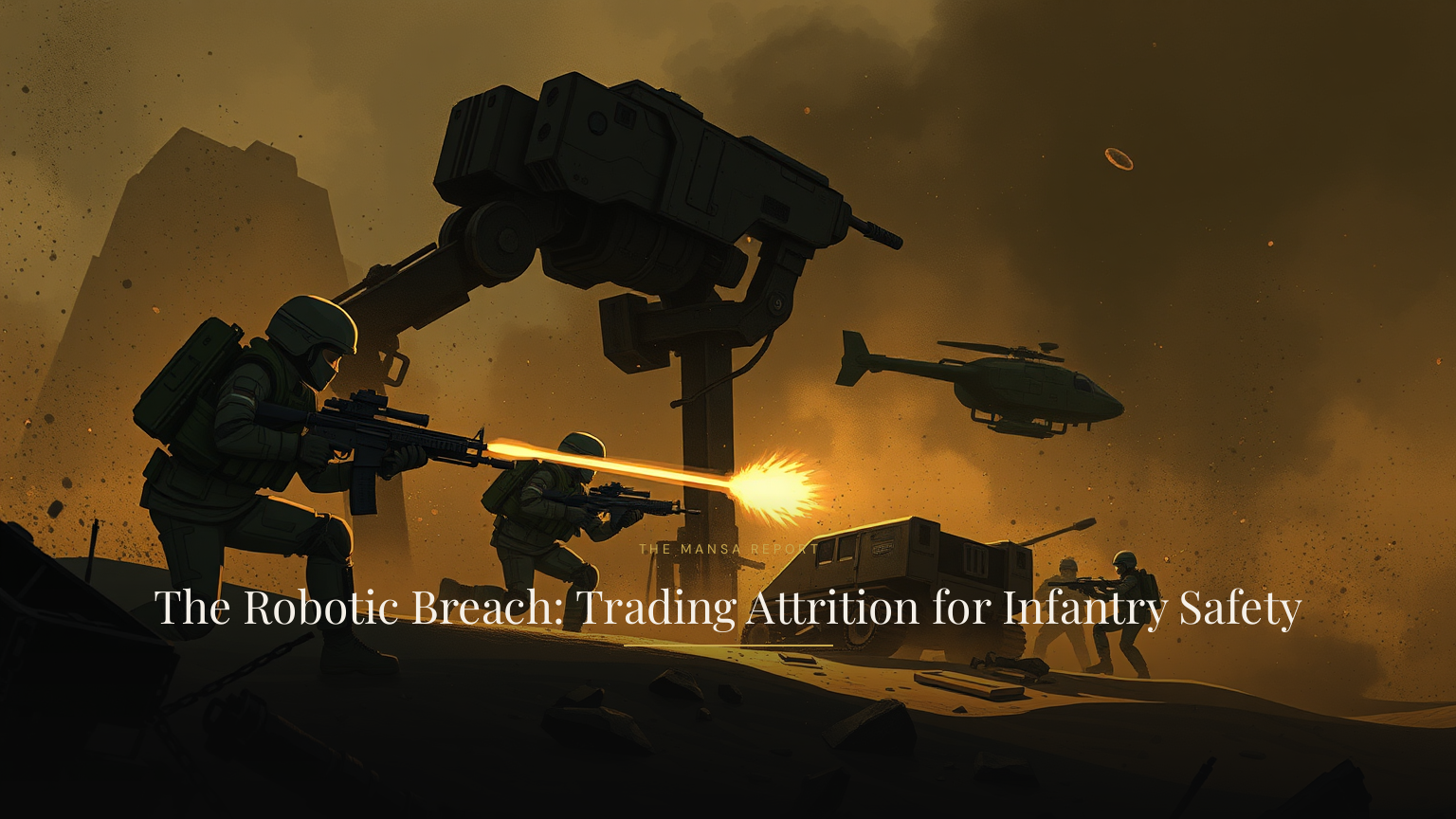
The Robotic Breach: Trading Attrition for Infantry Safety
The most dangerous point in an infantry battalion's fight is the breach point. This is where obstacles, trenches, and defenses are most heavily concentrated—and where brigades typically take the most casualties. During a recent exercise, the 3rd Mobile Brigade Combat Team, 101st Airborne Division, tested whether uncrewed systems could neutralize these threats before soldiers ever enter the fray.
The objective of this robotic combined arms breach was simple: make the breach uncontested for the rifleman. By using unmanned ground vehicles (UGVs) and drones to defeat simulated defenses, the commander sought to ensure that by the time infantry arrives, the opposition is already defeated.
The execution relied on a mix of improvised and purpose-built technology. Soldiers utilized Abe-101s, which are purpose-built attritable system (PBAS) drones built by the soldiers themselves. The operation began by attaching two of these Abes to a modified AERO Sky carrier drone to simulate a one-way attack munition designed to take down jammers.
The deployment followed a structured sequence:
- Waves of Abes were flown in five waves of five.
- Some waves carried attack munitions to target bunkers, vehicles, and simulated fighting positions.
- Other waves deployed smoke to disorient the opposition.
- Two UGVs, carrying 28-lbs. breaching charges, were used to detonate mined wired obstacles.
The results validated the strategy of using machines to absorb the initial risk. Col. Ryan Bell, commander of the 3rd MBCT, 101st Division, stated that the drones and UGVs absolutely did what was asked of them. The exercise proved that keeping soldiers in reserve while robots clear the path is a viable method for protecting personnel during high-casualty maneuvers.
As autonomous systems become more capable of handling the "breach," the role of the infantryman shifts from the first point of contact to the force that occupies the cleared ground. The question for commanders is no longer if robots can participate in the fight, but how much of the initial, most lethal phase of combat can be offloaded to them.
Consider how the integration of attritable, soldier-built drones changes your calculation of risk in high-stakes environments.
Subscribe to The Mansa Report
Strategic intelligence on AI, business building, and the future of technology. Delivered Monday through Friday.