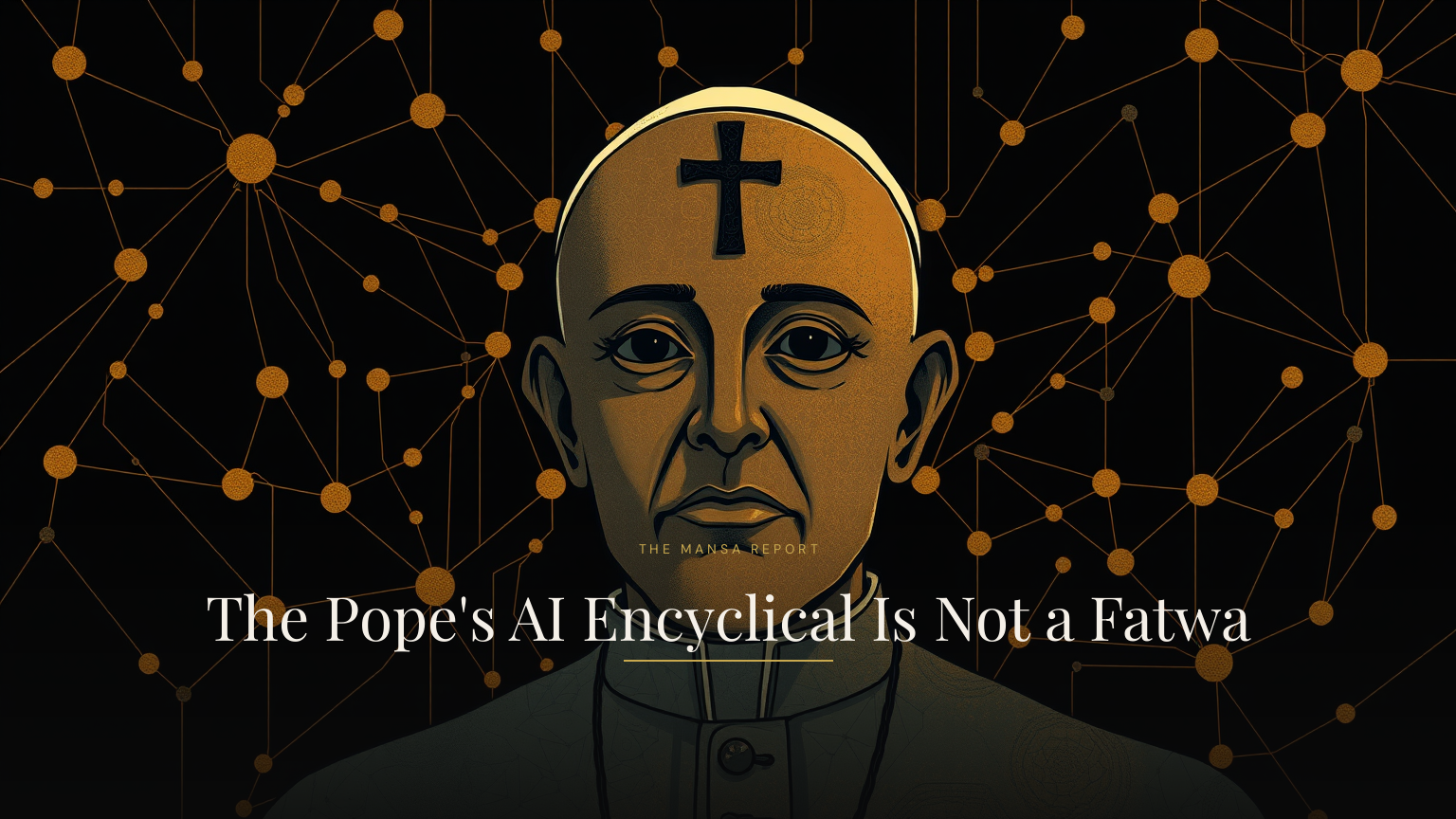
The Pope's AI Encyclical Is Not a Fatwa
The release of Magnifica humanitas on May 25, 2026, marks a specific shift in how institutional authority addresses the machine age. While much of the discourse surrounding the document has been characterized by extreme interpretations, the text focuses on safeguarding the human person in the time of artificial intelligence.
The significance of this document lies in its historical positioning. By adopting the name Leo XIV, the current Pope signaled an intent to treat the AI revolution with the same gravity that Pope Leo XIII applied to the Industrial Revolution. This is not merely a religious update; it is an institutional attempt to establish a framework for human dignity as technical capabilities expand.
The reaction to the encyclical has been polarized. Some observers have dismissed the text as weak, while others have framed it as a jihad against AI. These interpretations often stem from a lack of familiarity with Catholic theology. The presence of figures like Chris Olah, co-founder of Anthropic, at the presentation provided the document with Silicon Valley street cred, drawing the attention of the SF bubble to the Magisterium’s teachings.
This matters because the Pope functions as an impartial figure with significant aura. When the Church addresses AI, it is not just speaking to the faithful; it is attempting to influence the global conversation on how technology interacts with human identity. The debate is not about whether AI should exist, but how the human person is protected as these systems become pervasive.
Watch the tension between technical advancement and institutional safeguards. The question is whether the frameworks established by such institutions can maintain relevance as the scale of AI deployment grows.
Subscribe to The Mansa Report
Strategic intelligence on AI, business building, and the future of technology. Delivered Monday through Friday.