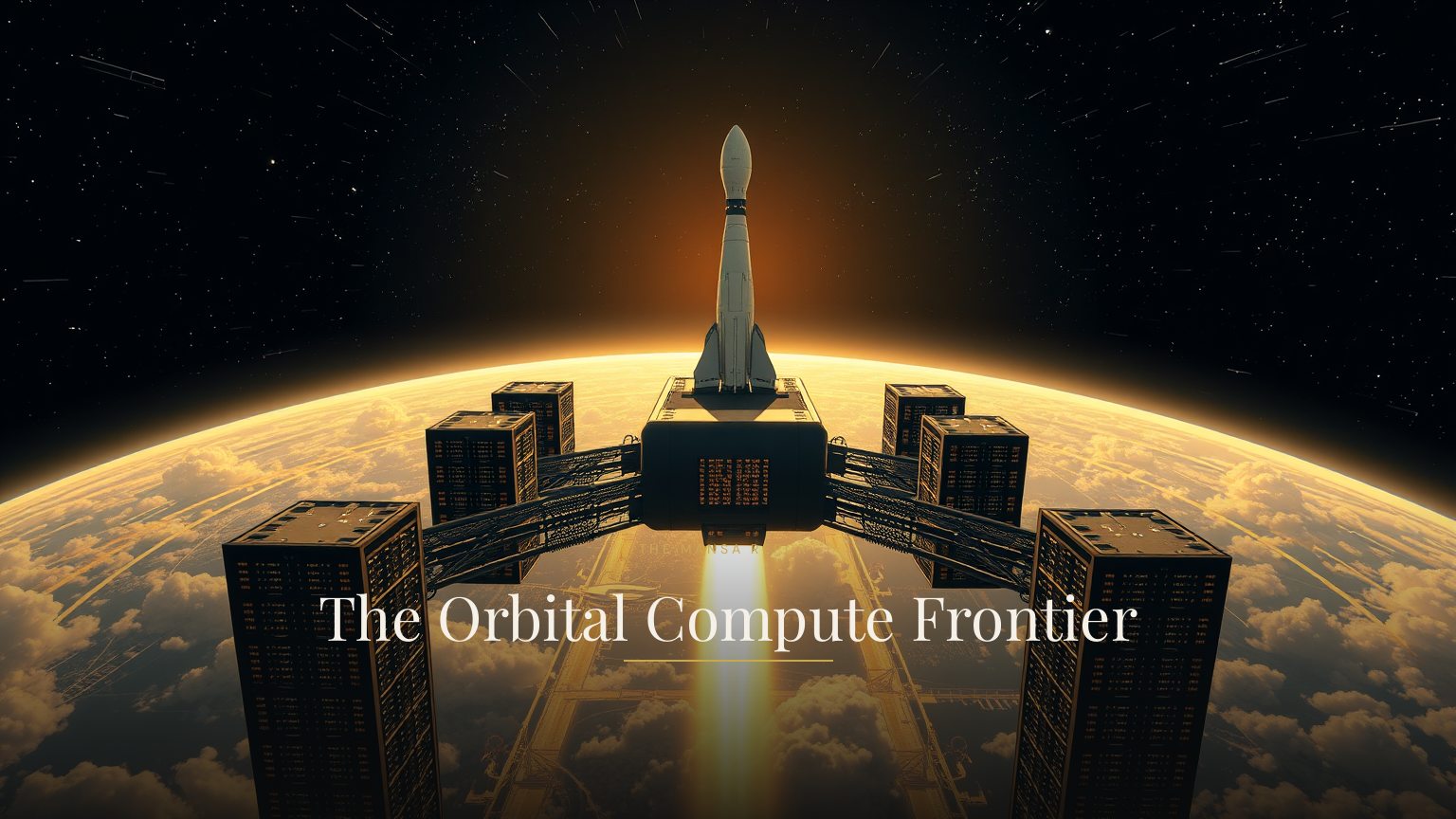
The Orbital Compute Frontier
SpaceX is moving beyond launch services and satellite internet to pursue orbital data centers. The company is seeking FCC approval for a solar-powered constellation of up to one million satellites linked through optical communications and integrated with Starlink.
This shift targets the primary bottleneck for terrestrial AI: energy and infrastructure constraints. Space offers access to effectively unlimited solar energy and removes the local permitting battles and grid constraints that are currently slowing data center development on Earth.
The technical specifications of this initial hardware reveal a massive scale of engineering, even if the computing density remains modest. The company’s first AI satellite is designed to contain roughly the computing power of a single rack in a conventional data center. To power this, electricity would come from two sets of solar panels with a combined wingspan of 230 feet, while cooling would rely on large radiators extending roughly 30 feet.
The move into orbit does not signal an abandonment of Earth-based infrastructure. Instead, orbital facilities are likely to complement terrestrial data centers rather than replace them. The economic viability of this transition depends heavily on lower launch costs and resolving many unresolved operational challenges.
The urgency for alternative compute locations is driven by the difficulty of connecting to terrestrial grids. Connection timelines now range from roughly two years in markets such as Mumbai to as many as 10 years in constrained locations across Japan.
Space-based computing remains largely theoretical at a commercial scale, but the integration with existing networks like Starlink provides a functional pathway for data transmission back to Earth. The industry is watching to see if the reduction in launch costs can eventually offset the immense complexity of orbital operations.
Assess your long-term compute strategy: are you prepared for a future where latency and energy availability are dictated by orbital mechanics?
Subscribe to The Mansa Report
Strategic intelligence on AI, business building, and the future of technology. Delivered Monday through Friday.