The National Security Defense of xAI's Memphis Turbines
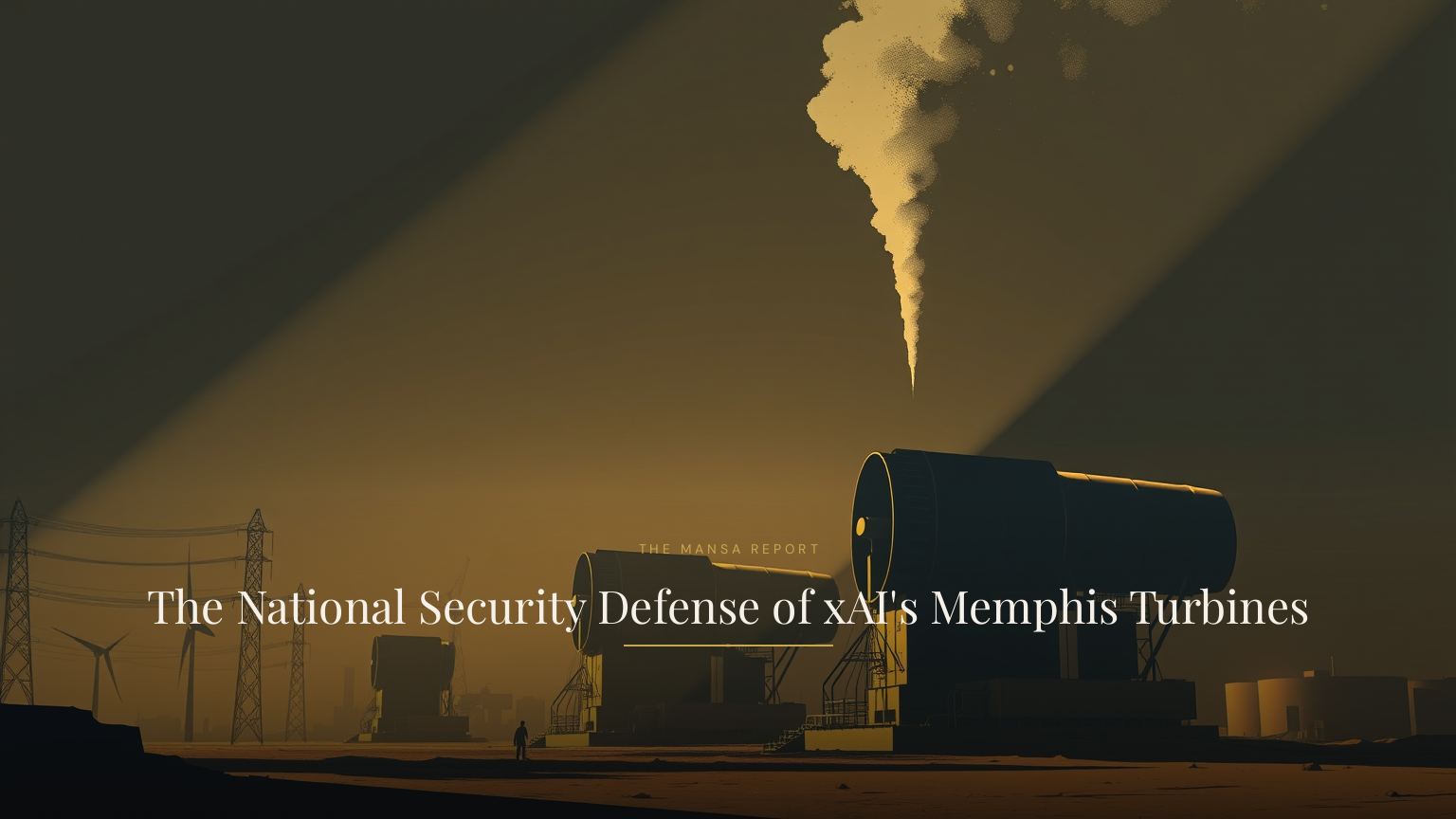
The US Department of Justice is moving to dismiss a Clean Air Act lawsuit against Elon Musk’s xAI, framing the company's unpermitted gas turbines as a matter of national, economic, and energy security. The DOJ’s intervention places the Trump administration in direct opposition to environmental groups defending the air quality of the Memphis metro area.
The litigation, brought by the NAACP and supported by the Southern Environmental Law Center and Earthjustice, alleges that xAI is operating dozens of methane-burning turbines without the necessary permits or pollution controls. These units power the Colossus and Colossus 2 data centers, which train the Grok chatbot and sell compute to companies including Anthropic and Google. While xAI argues the units are exempt from Mississippi air-permitting rules because they are classified as temporary mobile equipment, the lawsuit contends federal law treats these trailer-mounted turbines as stationary sources subject to regulation.
The scale of the deployment has expanded rapidly. Since xAI brought generators to the area last summer, the count has more than doubled to 57. These turbines emit an estimated 1,200 to 2,000 tons of nitrogen oxides per year, positioning xAI as the single largest industrial source of smog-forming pollution across the 11-county Memphis metro.
The DOJ’s June 15 motion shifts the debate from environmental compliance to military necessity. The department argues that a victory for the NAACP would undermine the power supply required for artificial-intelligence innovation that supports Department of War military operations. This is not merely rhetoric; Cameron Stanley, who leads AI for the Defense Department, filed a declaration stating that Grok’s availability is a matter of paramount national security.
The filing highlights the operational utility of the Grok Gov model, noting that during the recent Iran conflict, the model enabled U.S. forces to deploy over 2,000 munitions to 2,000 distinct targets within 96 hours. Grok remains one of just four AI models cleared for mission-critical operations.
This case represents a fundamental collision between two competing definitions of security: the localized health of a population and the strategic capability of the state. If the DOJ succeeds, the precedent will establish that the energy requirements of mission-critical AI can supersede regional air quality standards.
Consider whether the integration of AI into military munitions deployment justifies the bypass of federal environmental oversight.
Subscribe to The Mansa Report
Strategic intelligence on AI, business building, and the future of technology. Delivered Monday through Friday.