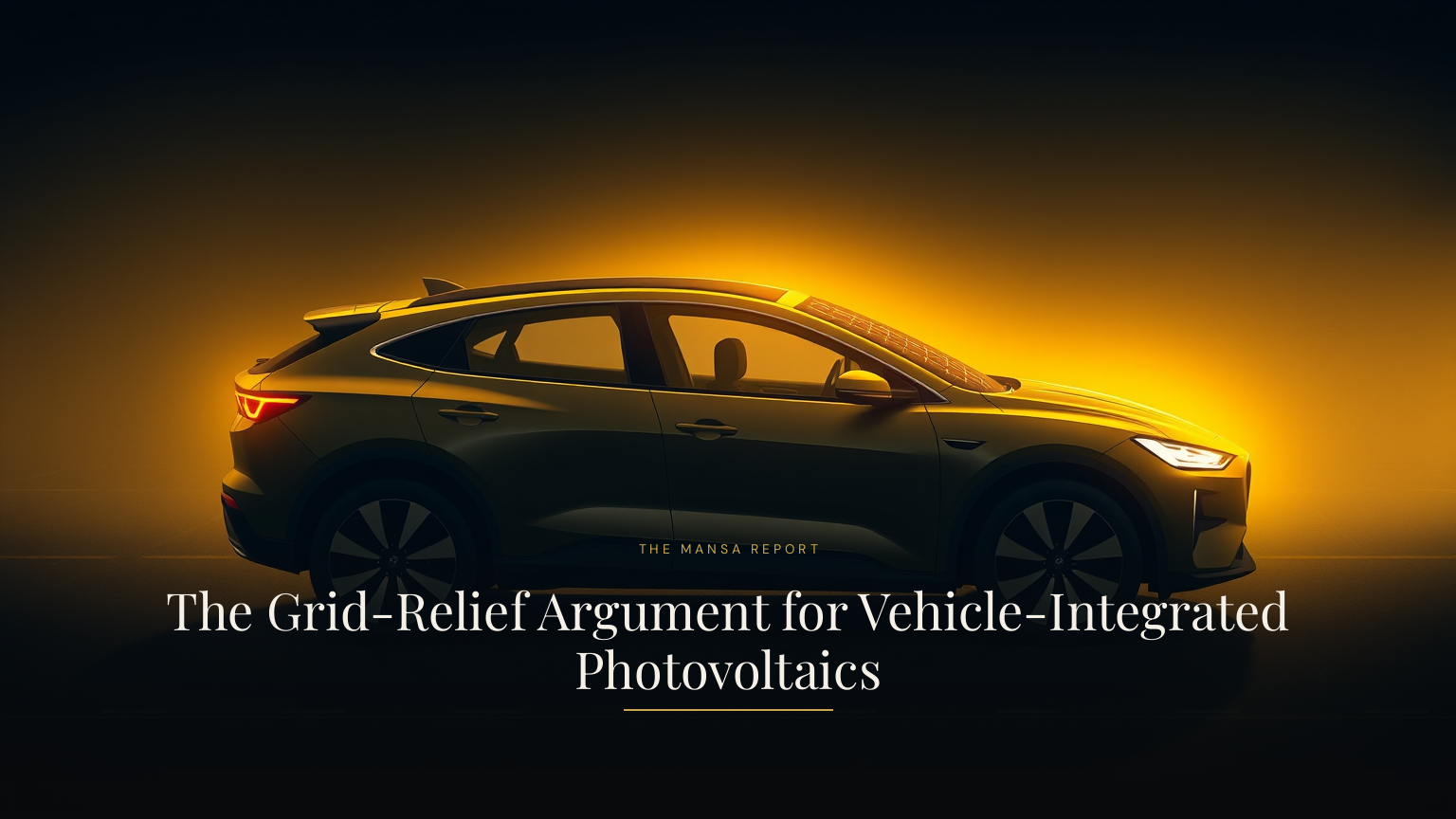
The Grid-Relief Argument for Vehicle-Integrated Photovoltaics
The argument for solar-powered cars is shifting from vehicle range to grid stability. While the industry has seen many companies attempt to sell solar-powered cars fail, Fraunhofer ISE is proposing a different utility: using vehicles to take the pressure off the power grid in Europe.
The European research project SolarMoves suggests that Vehicle Integrated Photovoltaics (VIPV)—solar modules integrated into vehicle components like the roof, hood, and side panels—can reduce electricity demand and grid strain. The study presents a best-case scenario for energy autonomy based on geography. In Central Europe, a passenger car can generate up to 55 percent of its annual energy needs. In Southern Europe, this figure can reach up to 80 percent.
This approach targets a specific inefficiency in the energy transition: the need for new infrastructure. By generating electricity where it is consumed, VIPV requires neither additional space nor new infrastructure, and it does not place a burden on power grids.
The technical potential of this integration is being investigated by a group including TNO, Fraunhofer ISE, Sono Motors, IM Efficiency, and Lightyear. However, the commercial viability remains unproven. The history of the sector is marked by companies like Sono Motors and Lightyear, which pursued the goal of mass-market solar vehicles but have not provided recent updates on their progress.
The shift in narrative from "solar cars" to "grid-supporting assets" changes the value proposition. The success of VIPV depends less on the consumer's desire for a self-charging car and more on the ability to integrate these mobile generators into a broader decarbonization strategy for the transportation sector.
The fundamental question for the industry is whether the cost of integrating these modules can be offset by the reduction in grid pressure and energy demand.
Can the automotive industry move beyond the vehicle as a consumer of energy and reposition it as a distributed component of the energy grid?
Subscribe to The Mansa Report
Strategic intelligence on AI, business building, and the future of technology. Delivered Monday through Friday.