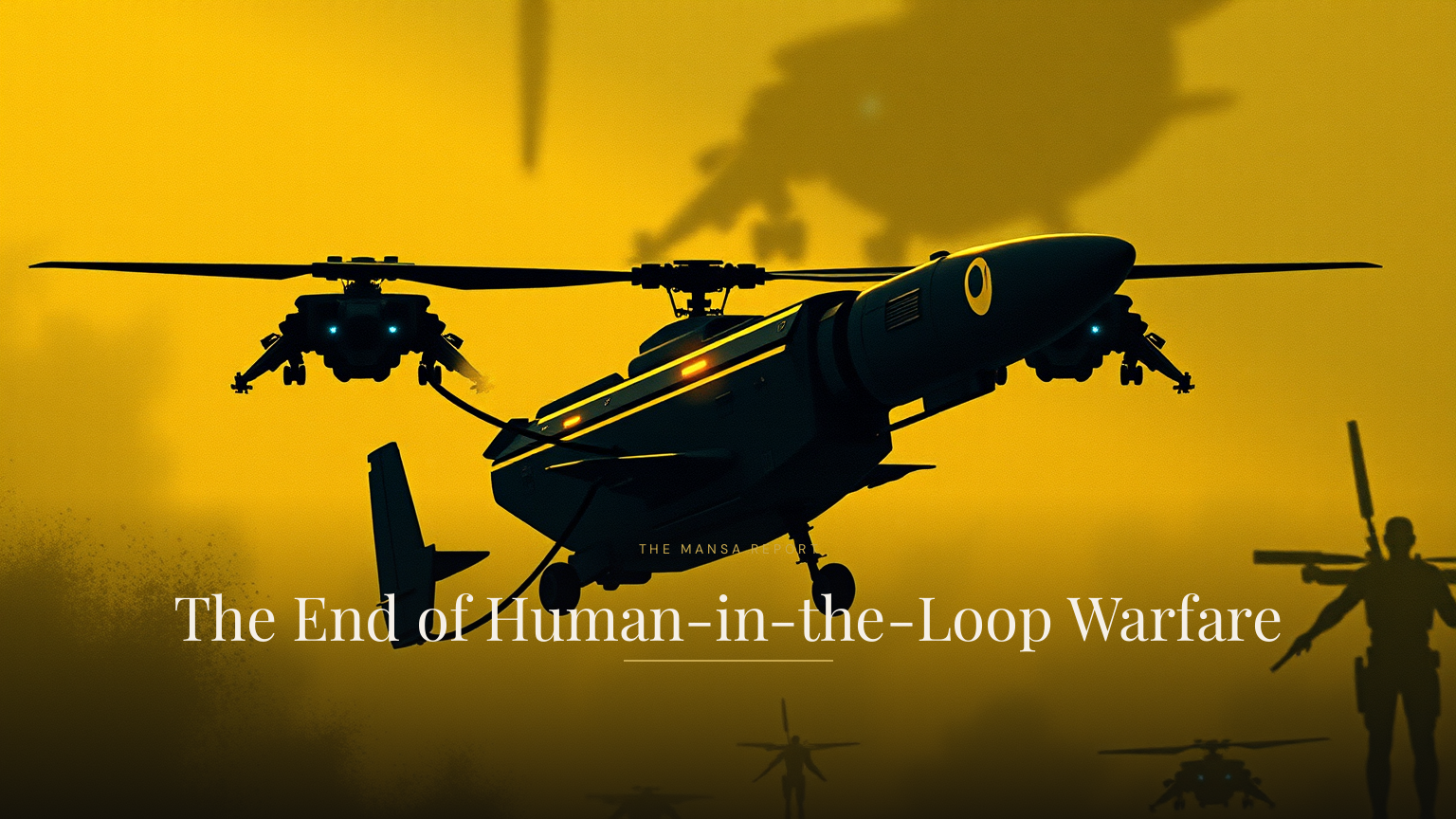
The End of Human-in-the-Loop Warfare
The threshold for lethal autonomy is shifting. UK officials are considering a policy shift that would allow weapons systems to select targets without direct human approval, according to a recent report.
This move signals a transition from human-supervised automation to true agentic warfare. In this model, the decision-making loop is closed by the machine itself. The strategic logic is clear: speed. In modern conflict, the latency introduced by a human operator—the time required to sense, decide, and act—is becoming a tactical liability. If an adversary utilizes autonomous systems that operate at machine speed, a human-in-the-loop becomes a bottleneck that can lead to defeat.
The implications for the development of AI agents are profound. We are moving beyond simple automation toward systems capable of high-stakes orchestration. When software is granted the authority to execute lethal actions based on sensor input alone, the definition of "control" changes. It moves from real-time intervention to the setting of initial parameters and constraints.
The risk is a fundamental loss of accountability. If the decision to strike is delegated to an algorithm, the chain of command becomes obscured by the complexity of the underlying code. This is not merely a technical challenge; it is a geopolitical one. The deployment of such systems will likely trigger a new arms race centered on the reliability and speed of autonomous decision-making architectures.
The question for policymakers is no longer whether autonomous systems will be used, but whether the human element can remain relevant in a theater dominated by machine-speed logic.
Subscribe to The Mansa Report
Strategic intelligence on AI, business building, and the future of technology. Delivered Monday through Friday.