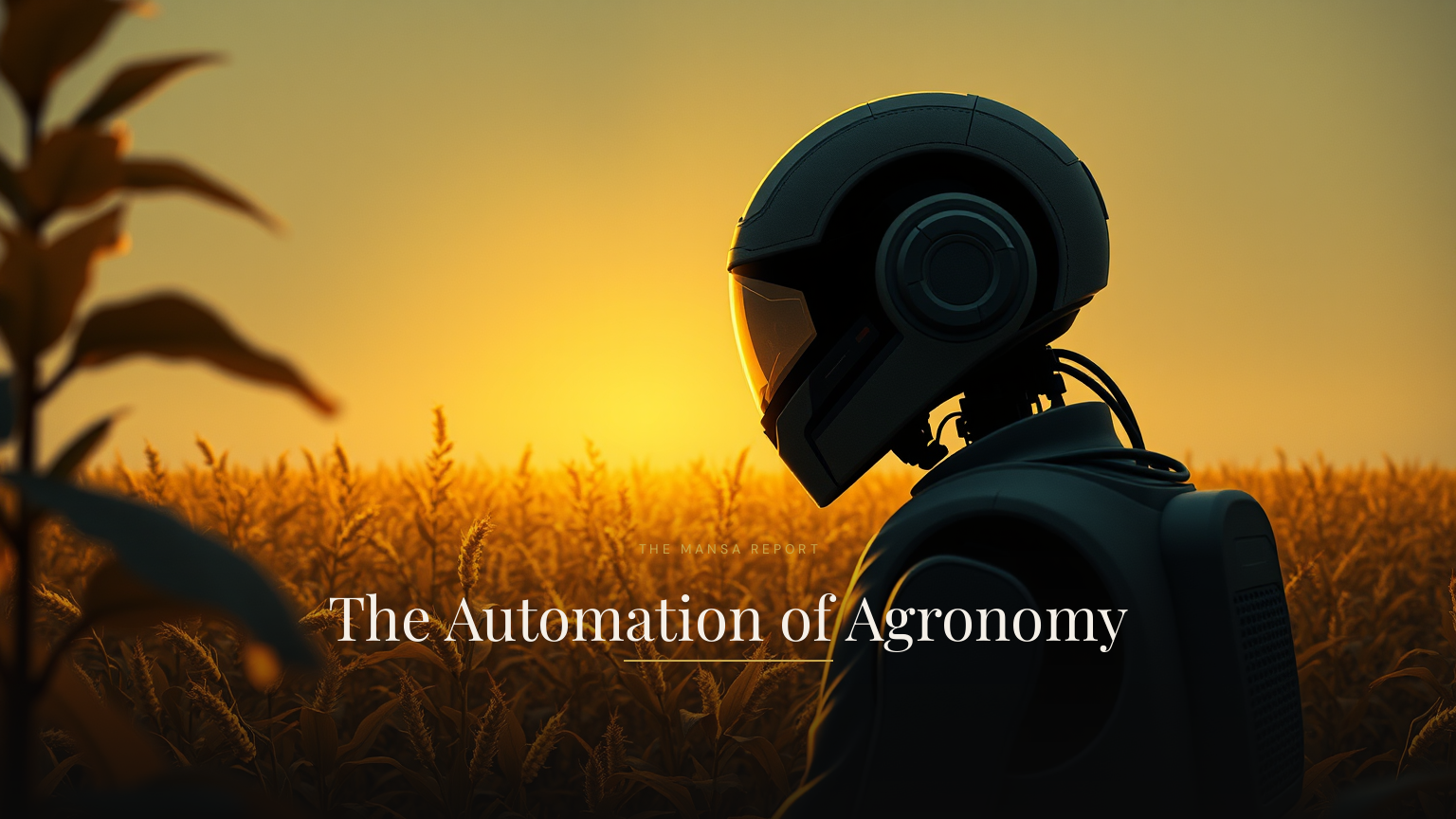
The Automation of Agronomy
The labor-intensive nature of manual crop scouting is facing a technological pivot. As plant sensors and robots emerge as viable alternatives, the industry is moving toward a model of continuous, automated monitoring.
The shift toward sensor-based agriculture addresses the fundamental inefficiency of human-led scouting. Manual inspection is periodic and prone to oversight; automated systems offer a persistent data stream. This transition represents more than just a hardware upgrade—it is a fundamental change in how crop health is managed and how risks are identified in real time.
For producers, the value lies in the reduction of uncertainty. Sensors can detect physiological stress before it becomes visible to the naked eye, allowing for targeted interventions. This precision reduces waste and optimizes resource allocation. For the broader market, the development of these autonomous systems signals a deepening integration of robotics into the foundational layers of the food supply chain.
The winners in this space will be those who can integrate these disparate data streams into actionable intelligence. The technology is moving from simple detection to complex, automated response.
Watch the progress of autonomous scouting fleets. The ability to scale these sensors across vast acreage will determine the speed of adoption.
Subscribe to The Mansa Report
Strategic intelligence on AI, business building, and the future of technology. Delivered Monday through Friday.