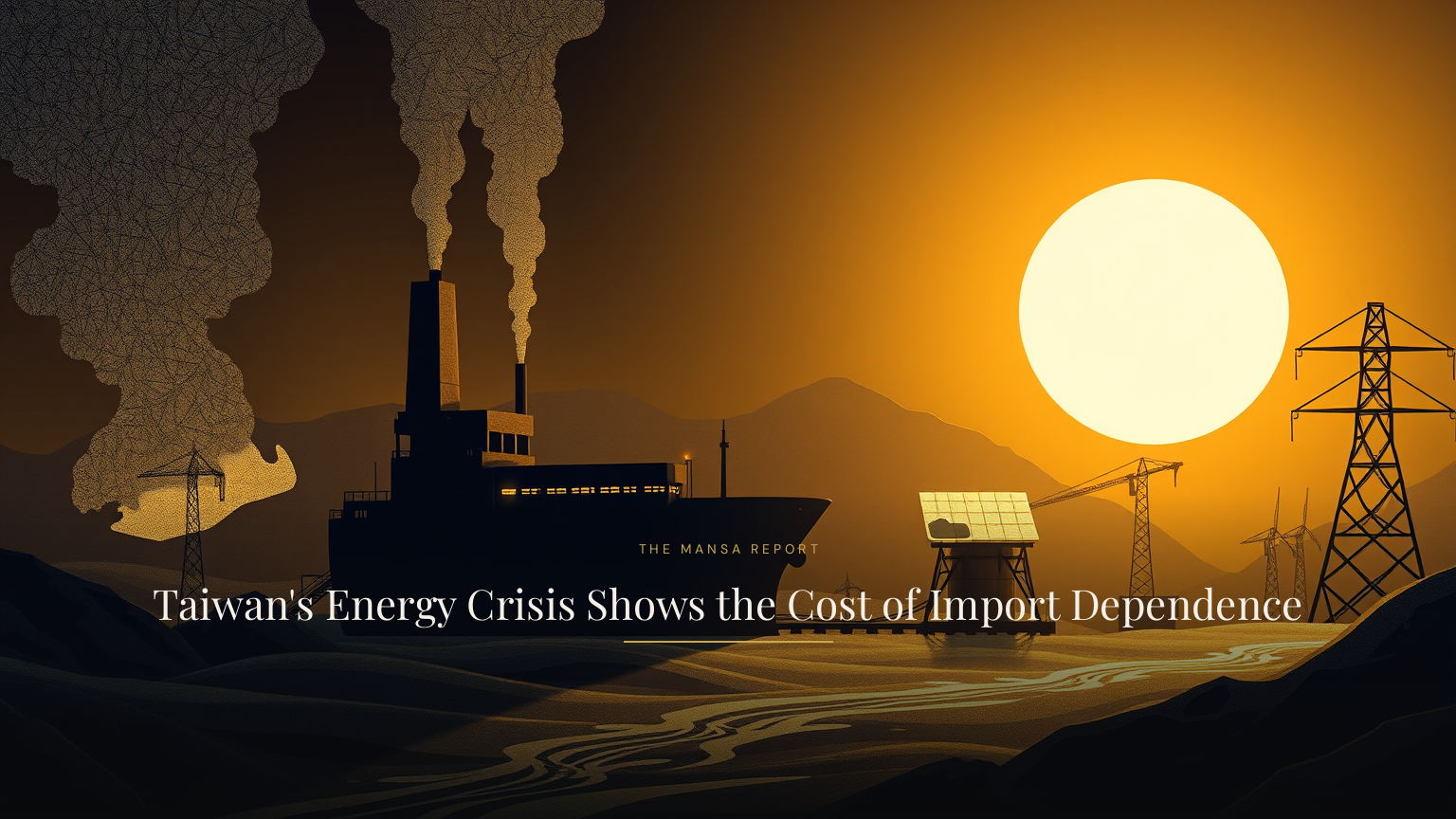
Taiwan's Energy Crisis Shows the Cost of Import Dependence
Taiwan is facing a critical vulnerability in its energy security. The nation depends on imports for between 94% and 97% of its energy needs, according to different estimates, as detailed by Oilprice. This heavy reliance on external sources leaves the island's economy exposed to geopolitical shocks and supply disruptions.
The scale of this dependence is evident in the island's power generation mix. Natural gas accounts for over 23% of Taiwan’s power generation, while another 36% comes from oil and almost 32% is generated from coal. Renewable energy remains a small part of the equation; solar is a 2% share of the energy mix, with wind and hydropower together generating 3%.
This structural weakness becomes an acute crisis when maritime trade routes are threatened. Following the closure of the Strait of Hormuz and attacks on Qatar’s LNG production facilities, Taiwan saw a third of its liquefied natural gas imports erased from the market. While Taiwan managed to weather this specific period by replacing lost Persian Gulf LNG with U.S. exports, these emergency cargoes lack the stability of long-term supply deals. As Natalia Katona noted, emergency purchases are costlier and subject to diversion if higher bidders emerge.
The stakes for Taiwan are rising because its industrial base is inherently energy-intensive. The island is a leader in chip production, and semiconductor heavyweight TSMC alone consumes as much as 8% of Taiwan’s electricity. As Taiwan also emerges as an artificial intelligence hub, demand for electricity from that segment of the economy will grow at a faster pace than the rest of the economy.
The mismatch between growing industrial demand and a supply chain reliant on volatile hydrocarbon imports creates a precarious environment for the global semiconductor market. If energy-intensive industries cannot secure stable, long-term power, the stability of the entire global electronics supply chain is at risk.
Consider whether Taiwan's shift toward U.S. gas provides true security or merely a temporary reprieve from much larger structural dependencies.
Subscribe to The Mansa Report
Strategic intelligence on AI, business building, and the future of technology. Delivered Monday through Friday.