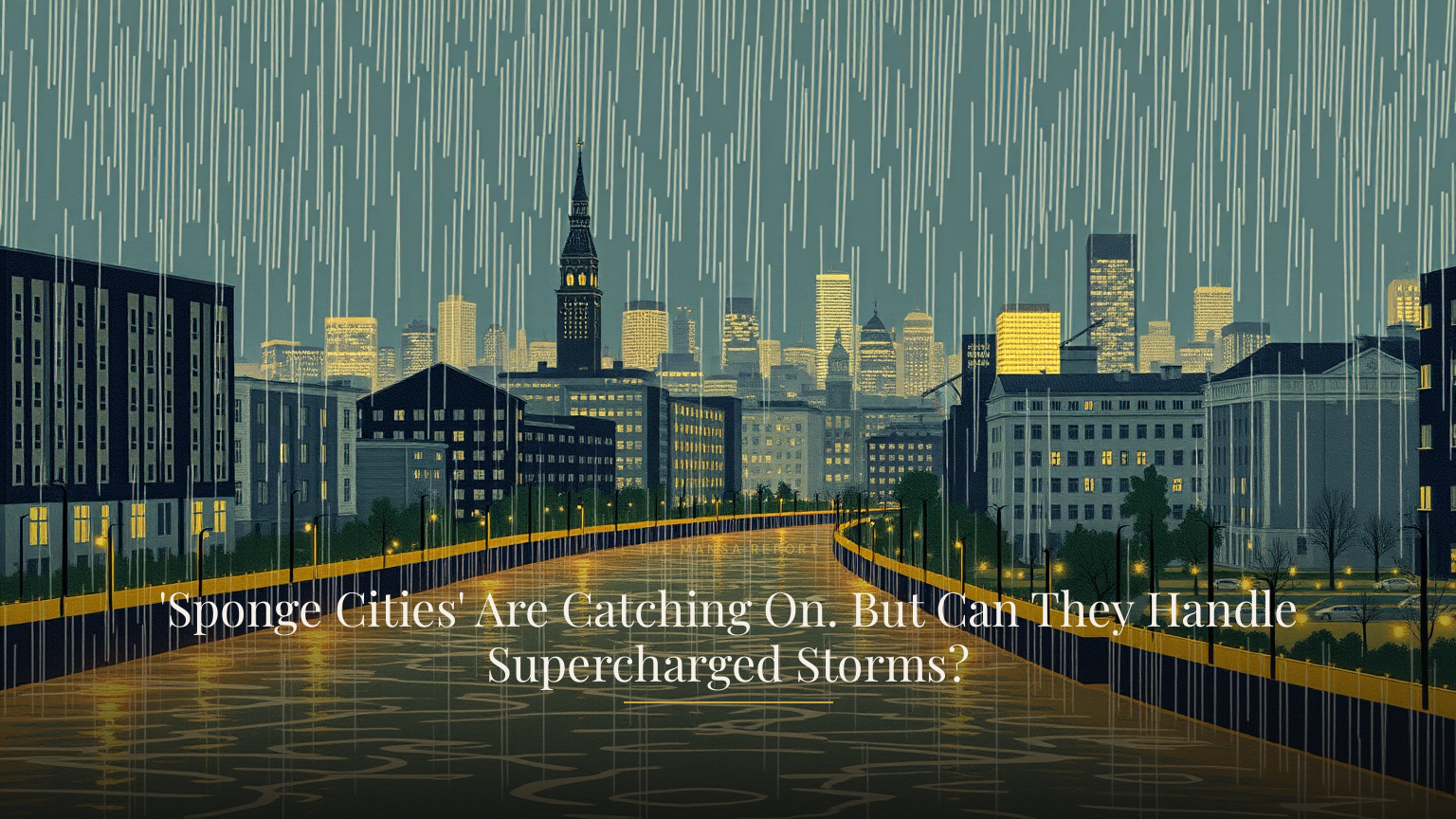
'Sponge Cities' Are Catching On. But Can They Handle Supercharged Storms?
Copenhagen learned the cost of impermeable urban design in 2011, when a single day of rain exceeding 5 inches caused more than $1 billion in damages according to reports on the city's climate adaptation. The disaster forced a decade of transformation, replacing traditional surfaces with green spaces and engineered stormwater infrastructure designed to absorb excess water.
This "Sponge City" approach is expanding to cities like Hong Kong and New York, yet the strategy faces a critical ceiling. As global warming intensifies both wet storms and droughts, the absorbent capacity of these natural systems is being pushed to its limit.
The fundamental issue is the seal we have placed on our urban environments. Civil engineer Franco Montalto notes that by superimposing infrastructure onto the earth, we have essentially sealed the surface. Materials like concrete and asphalt prevent water from soaking into the ground, instead directing it toward streets and drains. While older drainage systems functioned during previous decades, they are not equipped for the increasingly severe rainfall driven by climate change.
New York City illustrates the danger of aging infrastructure. Roughly 60 percent of the city's sewers belong to a centuries-old combined system where stormwater and sewage share the same pipes. Extreme rain events frequently trigger sewage overflows into waterways. To combat this, many American cities have spent billions of dollars on a mosaic of rain gardens, green roofs, and constructed wetlands.
The results are visible but inconsistent. In 2024, Los Angeles utilized green spaces and shallow basins with porous soil to soak up 8.6 billion gallons of water during an atmospheric river. However, these efforts currently function more as a patchwork than a unified network across the U.S.
The transition from a patchwork of rain gardens to a cohesive, resilient urban fabric is the primary challenge for the next decade of climate adaptation. We must decide if we can scale these green-gray solutions faster than the intensity of the storms they are meant to manage.
Subscribe to The Mansa Report
Strategic intelligence on AI, business building, and the future of technology. Delivered Monday through Friday.