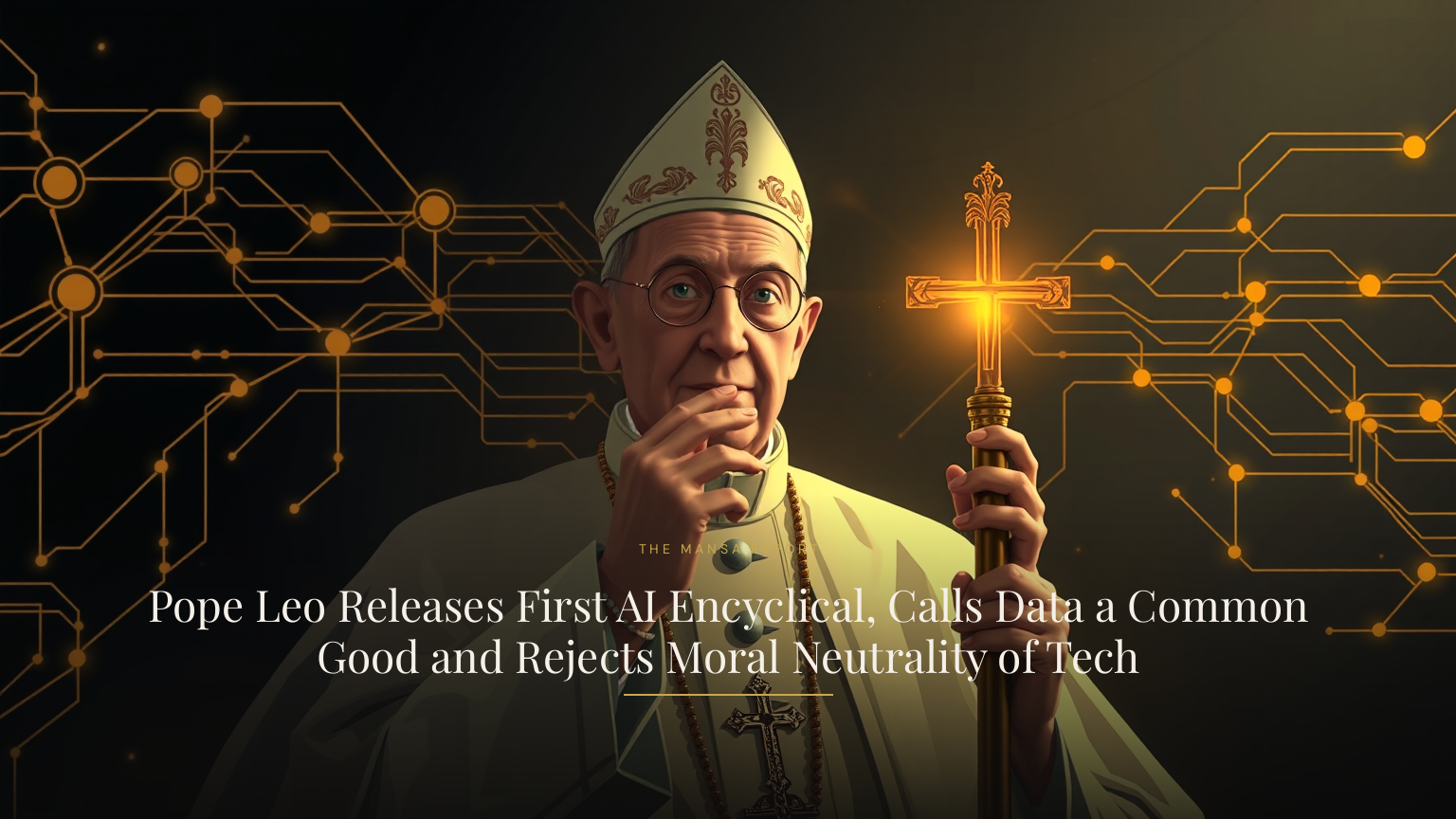
Pope Leo Releases First AI Encyclical, Calls Data a Common Good and Rejects Moral Neutrality of Tech
Pope Leo XIV has issued a 245-paragraph document that reframes artificial intelligence as a fundamental moral challenge rather than a mere technical evolution. In the encyclical Magnifica Humanitas, released on May 25, the Pope argues that technology is never neutral, as it inherently absorbs the values and economic incentives of its creators.
The timing of the release carries historical weight. Pope Leo signed the document on May 15, marking the 135th anniversary of the 1891 encyclical Rerum Novarum, which established the foundation for modern Catholic social teaching on labor rights. By linking AI to this lineage, the Vatican is signaling that the digital economy is the new frontier for social justice.
The core of the argument rests on the classification of digital assets. The encyclical asserts that algorithms, platforms, and data must be governed as common goods. This rejects the current model of private monopoly control, stating that data is the product of many contributors and should not be entrusted to a select few. This is an explicit challenge to the current architecture of Big Tech, where data is often treated as a proprietary commodity rather than a shared human resource.
The implications for the tech industry are significant. The document covers a broad spectrum of risks, including autonomous weapons, disinformation, and mass unemployment. At the Vatican launch, Anthropic co-founder Christopher Olah noted that the scale of AI labor displacement will require a response that is a moral imperative of historic proportions.
The Vatican is not merely calling for top-down regulation. By applying the principle of subsidiarity, the Pope advocates for transparent algorithms and independent community audits, pushing decision-making power toward the most local level possible. This suggests a move toward a decentralized oversight model that resists the centralization of power in a few corporate hands.
The era of treating algorithmic bias as an accidental byproduct is ending. If the world's largest religious institution views the digital landscape through the lens of "data colonialism," the pressure on tech companies to move toward transparent, community-audited systems will only intensify.
How will decentralized community audits hold up against the economic incentives of the companies building these systems?
Subscribe to The Mansa Report
Strategic intelligence on AI, business building, and the future of technology. Delivered Monday through Friday.