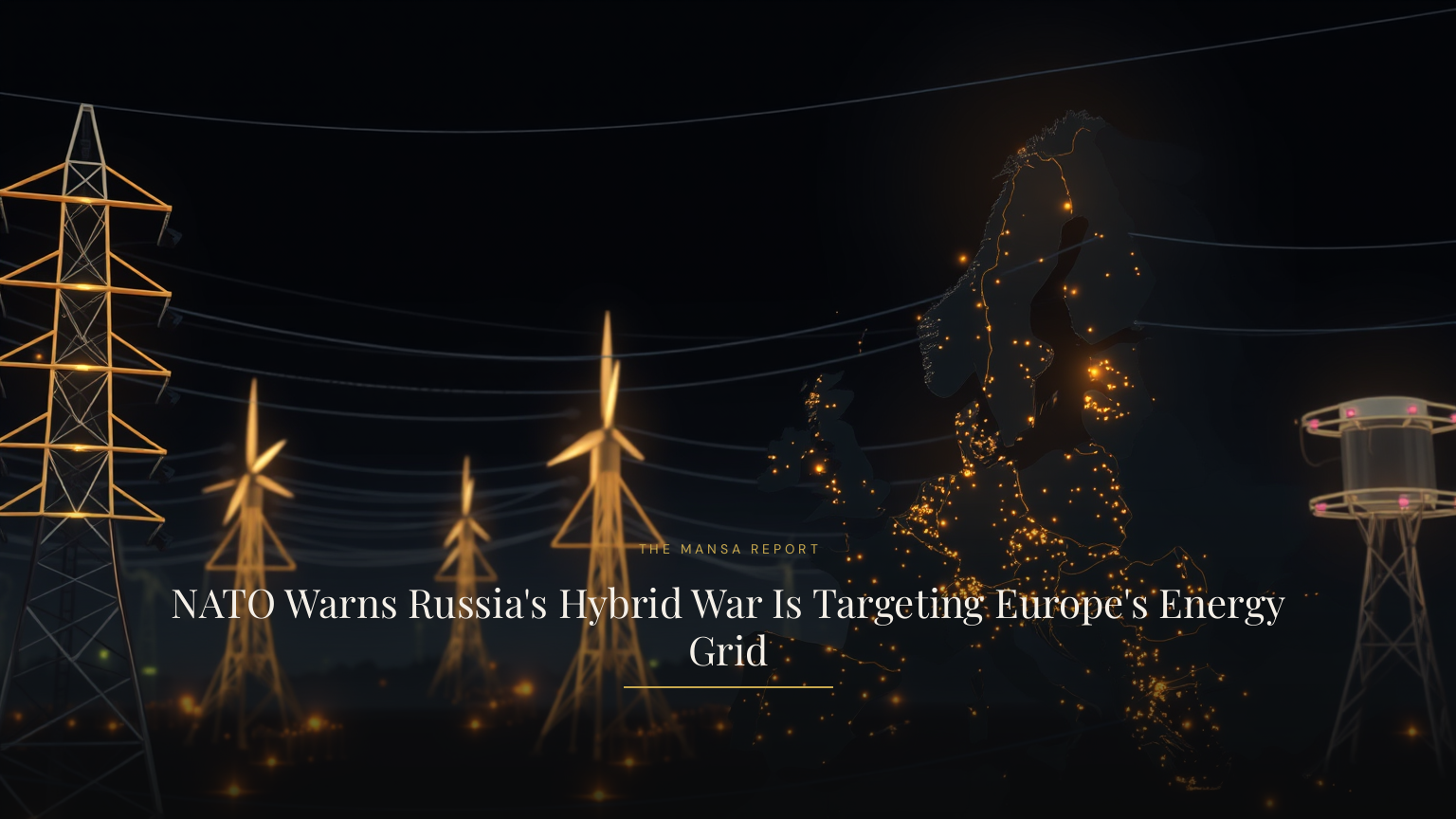
NATO Warns Russia's Hybrid War Is Targeting Europe's Energy Grid
Europe’s energy infrastructure is currently the primary target of a sustained Russian hybrid campaign. While attention often remains fixed on nuclear weapon transfers to Belarus near the Baltic States, the real threat lies in the systematic targeting of gas infrastructure, electricity cables, offshore networks, and control systems, according to a senior source familiar with the E.U. energy security complex.
The pattern of aggression is not new, but it is accelerating. This campaign traces back to 2007, following Russia's condemnation of NATO’s eastward expansion and a subsequent cyber-attack against Estonia. Since then, the West has witnessed a progression of escalations: the 2008 war in Georgia, the 2014 invasion of Ukraine and annexation of Crimea, and the 2022 invasion of Ukraine. We are now in a phase where Russia is testing Western resolve through both hybrid and direct physical attacks.
The physical reality of this conflict is already visible in the Baltic Sea. Since the 2022 invasion of Ukraine, there have been several incidents involving Russian-affiliated vessels severing undersea energy cables. In December 2024, Finnish authorities apprehended the Russian shadow fleet vessel Eagle S after it severed EstLink 2, a critical electricity interconnector between Finland and Estonia. The presence of military-grade detection hardware in the ship's hull points to premeditated attacks on European infrastructure. Similar activity was noted with the vessel Scanlark, which was detained after being caught using surveillance drones and spying equipment near the Olkiluoto Nuclear Power Station.
This is a strategy of boundary-testing. Russia has already utilized a full array of these measures in Ukraine and is prepared to deploy them elsewhere. The objective is to find the limit of Western deterrence by targeting the systems that sustain modern economies.
For energy leaders and policymakers, the takeaway is clear: the era of treating energy infrastructure as a secondary security concern is over. The vulnerability of undersea cables and control systems is no longer theoretical; it is an active theater of war.
Watch the movement of Russian-affiliated vessels in the Baltic and North Seas. The next disruption will likely be physical, not just digital.
Subscribe to The Mansa Report
Strategic intelligence on AI, business building, and the future of technology. Delivered Monday through Friday.