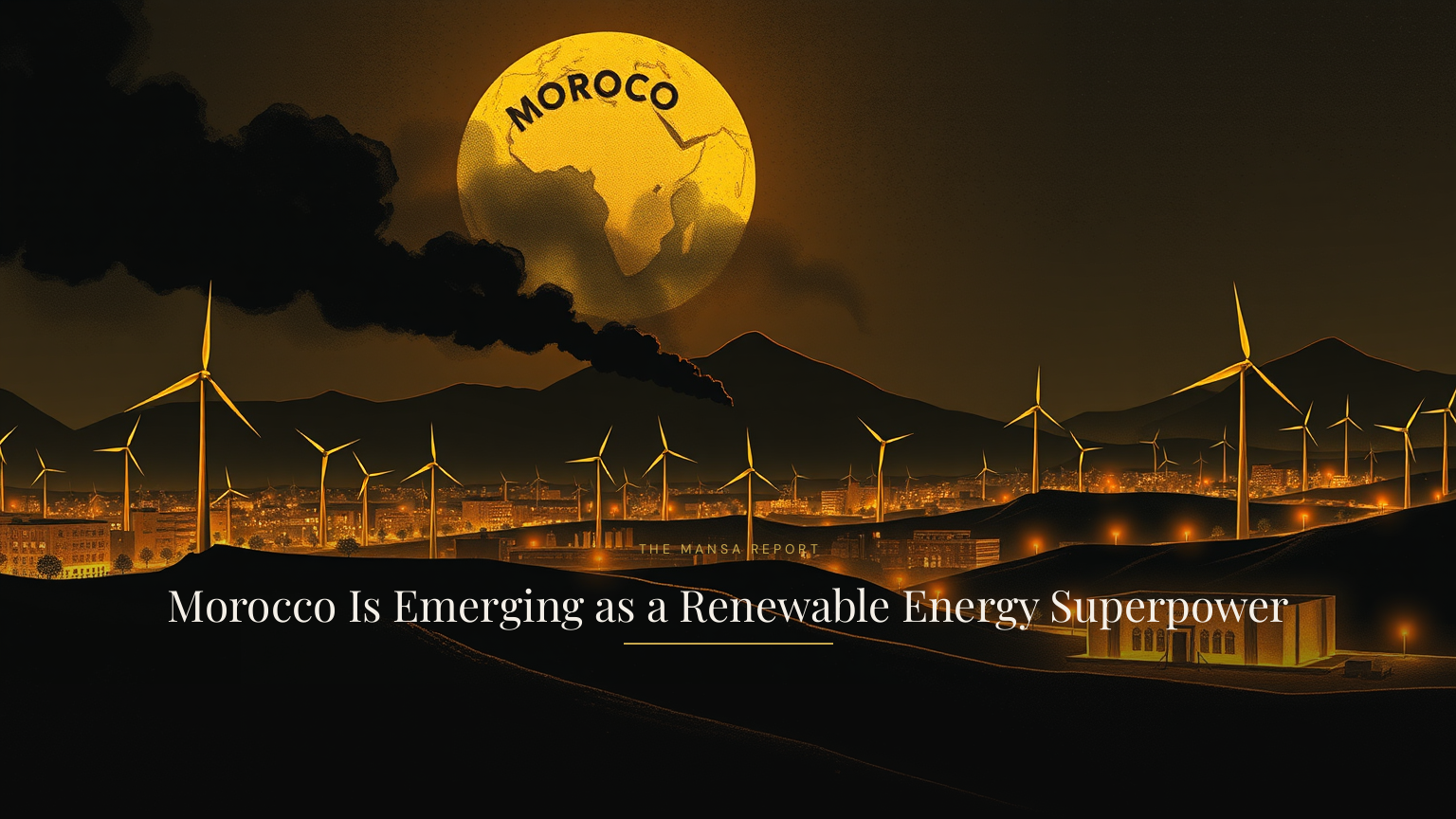
Morocco Is Emerging as a Renewable Energy Superpower
Morocco is shifting its energy profile from fossil fuel dependence to a position of regional leadership. While the country still uses coal to produce around 60 percent of its electricity, strategic investments in renewables are restructuring its domestic grid and its potential as a green hydrogen and sustainable shipping hub.
The scale of this transition is measurable. By the end of 2025, Morocco reached an estimated 5.5 GW of operational renewable energy capacity, which accounted for 45.4 percent of the nation's total installed capacity. This mix includes 2.1 GW of hydropower, 2.4 GW of wind power, and 961 MW of solar installations. The government has set specific targets for this transition: achieving a 52 percent renewable energy share in the electricity mix by 2030 and 70 percent by 2050.
The foundation for this growth rests on two pillars: natural geography and regulatory framework. Morocco possesses one of the highest solar insolation rates globally, with over 3,000 hours of sunshine per year. This geographic advantage is being met with increased industrial activity; solar technology imports rose by around 46 percent in the first quarter of 2026. This expansion is supported by Law 13-09, enacted in 2009, which allowed private developers to build renewable plants and sell electricity directly to consumers through the national grid.
The Moroccan Agency for Sustainable Energy (MASEN) has authorized approximately 66 renewable energy projects with a combined capacity of 6 GW since 2021. Looking forward, MASEN and the national utility ONEE are planning to add around 4.4 GW of renewable capacity by 2030. This planned addition includes 2.5 GW of new solar installations and 1.9 GW of new wind capacity, supported by private investors.
Large-scale international players are already committing capital to these projects. Saudi Arabia's ACWA Power was awarded the Noor Midelt II and Noor Midelt III solar projects, each featuring a 400 MW capacity and a 602 MWh battery capacity. Additionally, EDF, Masdar, and Green of Africa were selected to construct an 800-MW complex.
This transition moves Morocco beyond mere energy security. By building the capacity to export green energy and hydrogen, the country is positioning itself as a critical node in the energy architecture between Africa and Europe. The success of this strategy depends on whether the influx of private investment can keep pace with the ambitious 2030 and 2050 targets.
Can Morocco transform its solar and wind advantages into a permanent competitive edge in the global green hydrogen market?
Subscribe to The Mansa Report
Strategic intelligence on AI, business building, and the future of technology. Delivered Monday through Friday.