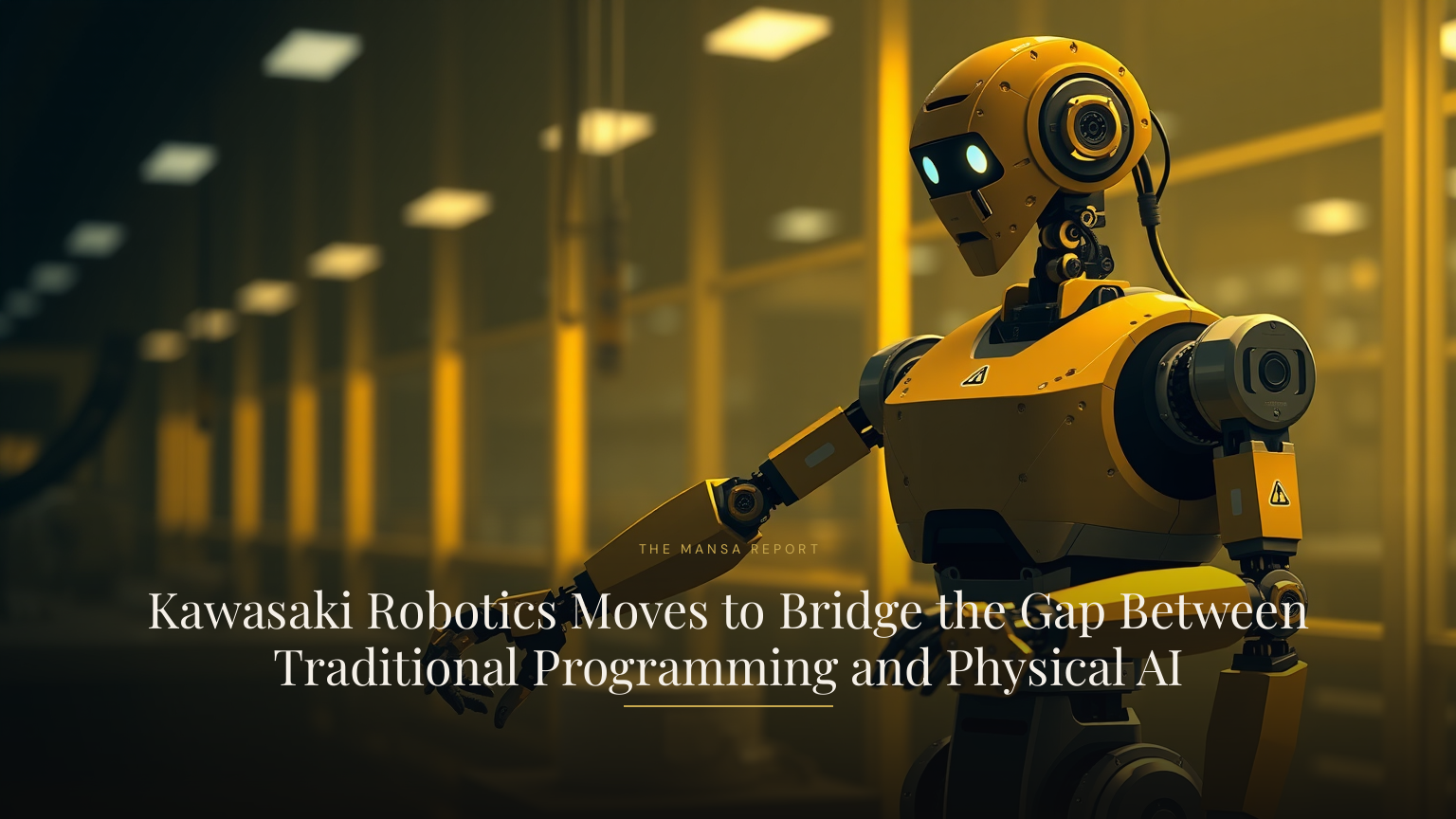
Kawasaki Robotics Moves to Bridge the Gap Between Traditional Programming and Physical AI
Kawasaki Robotics is positioning itself at the intersection of industrial reliability and adaptive intelligence. At the upcoming Automate event in Chicago, the company will unveil several systems designed to demonstrate how machine learning, vision systems, and real-time control are changing industrial automation.
The centerpiece of this showcase is the RL030N, an eight degree-of-freedom (DoF) platform built for physical AI applications. Unlike conventional robots optimized for repetitive tasks, the RL030N supports applications requiring adaptive motion and obstacle avoidance. The platform combines high-speed motion, lightweight construction, and real-time external orchestration to operate in dynamic and confined environments.
This move signals a shift in how established manufacturers approach the intelligence layer of robotics. While startups have focused on developing motion-planning software, those systems often lacked the necessary dexterity or suffered from latency. Kawasaki is attempting to bridge this gap by integrating perception and decision-making directly into robotic motion.
The company's strategy remains grounded in its existing industrial footprint. As a global manufacturer of vehicles ranging from planes to trains, Kawasaki focuses on outcomes rather than the novelty of humanoid platforms. Their current robots build millions of products a year, and the transition to AI is being approached through the lens of maintaining that scale and reliability.
Beyond the RL030N, the company will present the MXP360L and BA013L industrial robots at Booth S-2201. The exhibition will also include demonstrations of patented Pulseboard inspection technology and systems for advanced motion control.
For the manufacturing sector, the significance lies in the transition from static automation to adaptive autonomy. If Kawasaki can successfully marry the dexterity required for physical AI with the reliability established since 1969, the barrier to deploying intelligent, adaptive robots in complex environments will drop significantly.
Watch whether the integration of real-time external orchestration in the RL030N actually solves the latency issues that have hindered software-heavy approaches to motion planning.
Subscribe to The Mansa Report
Strategic intelligence on AI, business building, and the future of technology. Delivered Monday through Friday.