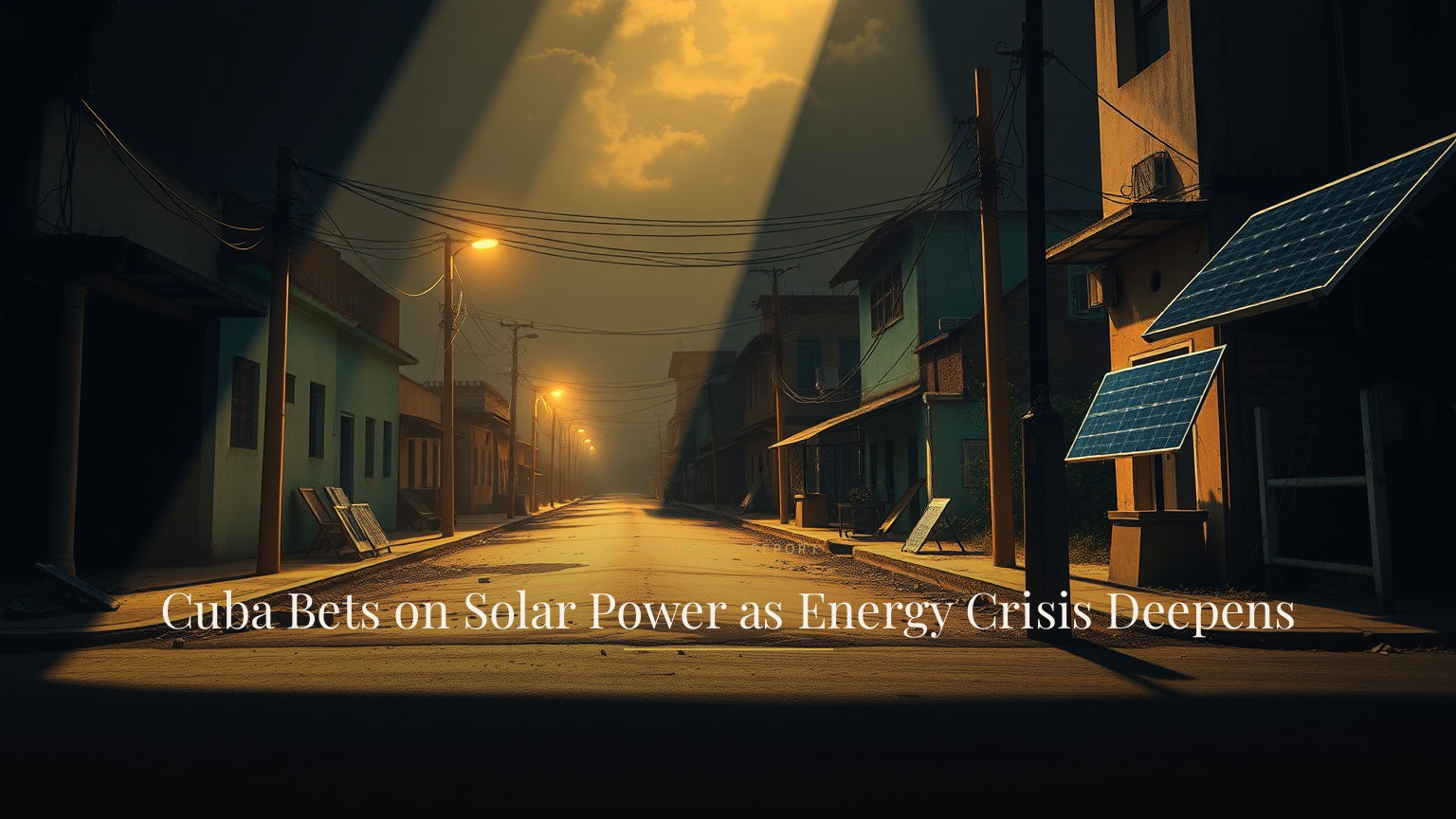
Cuba Bets on Solar Power as Energy Crisis Deepens
Cuba is attempting to restructure its energy dependency through private sector solar investment as a long-standing energy crisis intensifies. The country faces regular blackouts and severe fuel shortages following the disruption of energy imports from Venezuela.
The scale of the deficit is significant. Cuba requires about 100,000 barrels a day to power its grid and meet regular transportation demands, yet it fulfills just 40 percent of this demand domestically. This shortage stems from years of underinvestment in energy infrastructure and recent geopolitical shifts. Following the United States’ intervention in Venezuela in February, energy imports from Caracas to Havana stopped. While Mexico stepped in to fill the gap, the Trump administration threatened high trade tariffs on any power providing Cuba with fuel and introduced measures to penalize companies looking to invest in the island.
This energy instability is directly impacting the Cuban economy. Businesses face regular blackouts and the high cost of fuel prevents many from operating. In response, the Cuban government is loosening its policy of state centralism to encourage energy diversification. The state is now providing greater tax exemptions for the import of solar panels for any type of business.
The shift toward private capital is accelerating. In March, the government introduced a new law for mixed limited liability companies, allowing private capital to merge with state companies for the first time. This change is expected to spur investment in industries historically controlled by the government, such as sugar and precious mineral mining.
The political tension remains high. In May, President Miguel Díaz-Canel described U.S. sanctions as “immoral, illegal, and criminal” after the U.S. imposed stricter sanctions on 11 Cuban officials and the country's main intelligence agency.
The Cuban government is betting that private sector solar adoption can bypass the constraints of the fuel blockade. The success of this strategy depends on whether tax incentives can offset the risks of operating under heavy U.S. sanctions and trade threats.
Watch the implementation of the new mixed limited liability company laws to see if private capital can actually scale solar infrastructure.
Subscribe to The Mansa Report
Strategic intelligence on AI, business building, and the future of technology. Delivered Monday through Friday.