Boeing Wins $166.8M Contract Modification for C-17 Landing Gear Spares
A contract modification of $166.8M is not merely an accounting entry for Boeing; it is a signal of the enduring value of established hardware platforms and their long-tail service requirements. This development reaffirms the economic logic of sustainment in the aerospace sector, where the lifecycle of an asset like the C-17 generates predictable revenue long after initial production concludes.
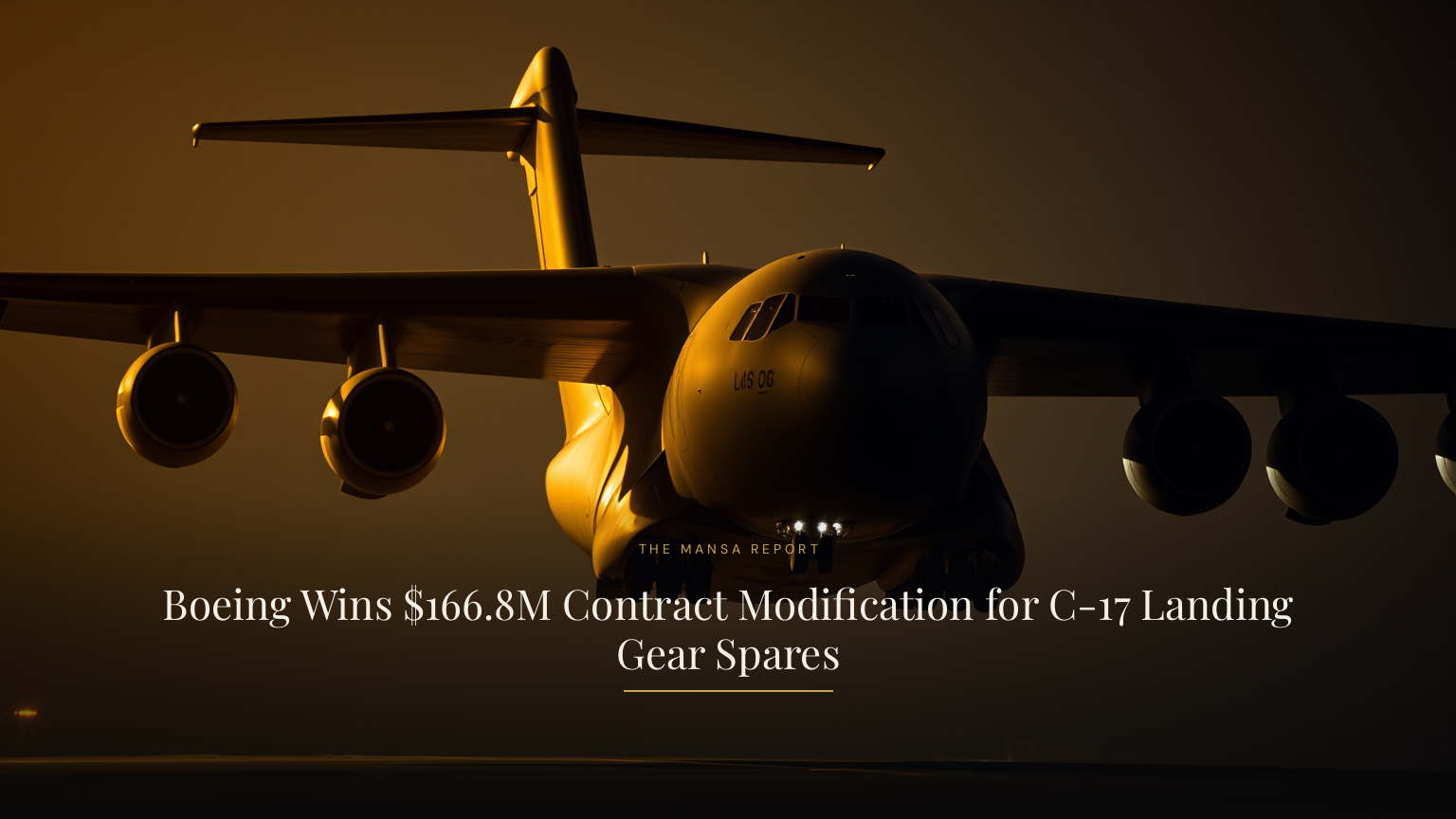
Boeing has won a $166.8M contract modification specifically to provide landing gear spares for the C-17. (Source). The reporting on this contract comes from Seeking Alpha, a platform whose stated mission is to provide "Power to Investors". The nature of this award—a modification for spares—points directly to the operational tempo and maintenance needs of the existing C-17 fleet. Landing gear is a non-negotiable, high-stress component, and securing its supply chain is fundamental to keeping the aircraft operational. For Boeing, this is the steady, essential business that underpins more speculative ventures. It demonstrates a core competency in managing the lifecycle of its most critical products.
The context in which this information is presented by Seeking Alpha is itself instructive. The platform organizes its market news into sections such as "On The Move" and "Merger & Acquisition News", and provides information on "Top Rated ETFs". Notably, it also maintains a dedicated section for "Artificial Intelligence (AI) News". The placement of a conventional aerospace maintenance contract within this broader information ecosystem highlights a key dynamic. The tangible, industrial economy represented by Boeing's C-17 spares contract runs in parallel with the high-growth narrative surrounding Artificial Intelligence.
This juxtaposition is not an accident. For the audience Seeking Alpha serves, the Boeing contract represents a known quantity: a stable revenue stream from a legacy asset. It is a different class of opportunity entirely from what might be found in the "Artificial Intelligence (AI) News" section. The $166.8M award for the C-17 is a reminder that while attention may be focused on new technological frontiers, the business of maintaining existing, mission-critical infrastructure remains a substantial source of value. It anchors Boeing's financial performance in the physical world, providing a ballast against ventures into less certain domains.
This leaves a critical question about how value is perceived and pursued. As platforms like Seeking Alpha cater to an audience evaluating everything from "Top Rated ETFs" to AI developments, the steady mechanics of a contract for C-17 landing gear provides a grounding data point. The question for an entity like Boeing is how these two worlds—the sustained performance of legacy hardware and the forward-looking potential of technologies like AI—will integrate within its own strategy and operations.
Subscribe to The Mansa Report
Strategic intelligence on AI, business building, and the future of technology. Delivered Monday through Friday.